
About Certificates of Compliance

In South Africa, an Electrical Certificate of Compliance (CoC) is a crucial legal document. It verifies that the electrical installation on a property complies with the prescribed statutory safety standards.
Why do you need one?
The Occupational Health and Safety Act (No. 85 of 1993) requires every property owner to have a valid electrical CoC. You typically need one when:
- Selling a property (required before transfer can happen).
- Making significant alterations or additions to an existing electrical installation.
- Applying for or renewing certain insurance policies.
What does it cover?
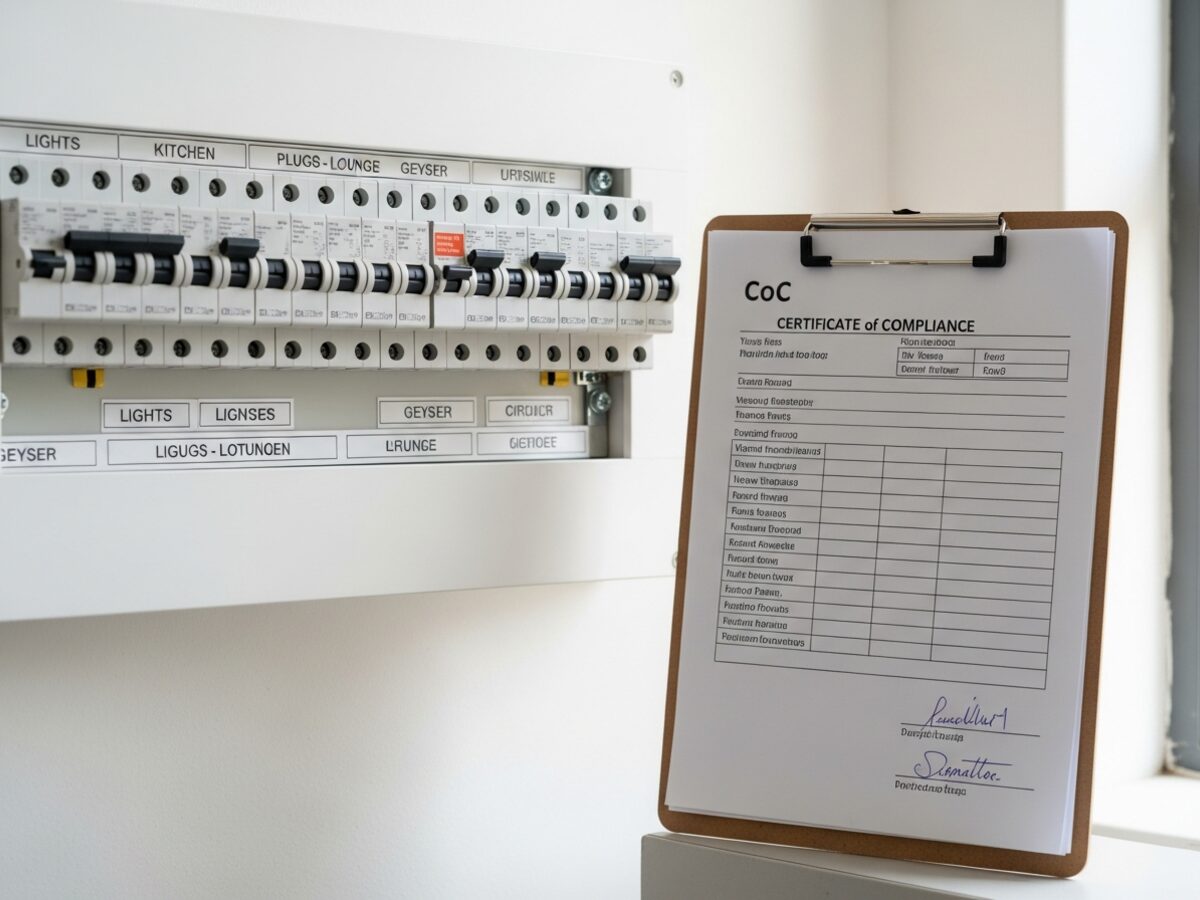
A CoC covers the electrical installation from the point of supply (where the municipality or Eskom connects to the property) to the point of consumption (socket outlets, light switches, and terminals). It does not cover appliances plugged into the system (like fridges or TVs).
Who can issue a CoC?
Only a Registered Person (a qualified electrician registered with the Department of Employment and Labour) can issue a valid CoC. They must also be employed by or operate as a registered Electrical Contractor.
Why verify your CoC?
Unfortunately, fraudulent, incomplete, or hastily completed CoCs are not uncommon. A flawed CoC might leave you legally liable or cause your insurance claims to be rejected in the event of an electrical fire. Verifying your CoC helps you catch administrative and logical errors before they become costly problems.